
Design your virtual weight loss workflow for lasting results
- Anne Marie Noe

- Jun 26
- 9 min read

If you’ve tried diet after diet only to end up back where you started, you’re not alone. Millions of women in Florida are frustrated by programs that promise fast results but ignore the real, lasting change that comes from personalized support, community, and science. The good news? A smarter approach is available right now. Clinical trials show women lose more weight than men on GLP-1 and tirzepatide medications, with perimenopausal women seeing up to 23% total body weight loss. This guide is your step-by-step blueprint for building a virtual weight loss workflow that actually sticks.
Table of Contents
Key Takeaways
Point | Details |
Set clear foundations | A thorough health check and preparation phase will position you for success in your virtual weight loss workflow. |
Follow a structured workflow | Step-by-step virtual programs combining coaching, medications, and support groups drive the best results. |
Troubleshoot early | Address setbacks like weight regain or motivation dips proactively to maintain momentum. |
Track and adapt | Regularly track progress and refine your routine to sustain long-term weight loss efficiently. |
Lean into community | Ongoing support from a virtual community is essential for both accountability and encouragement. |
What you need before starting your virtual weight loss journey
Now that you’ve seen why virtual programs work, it’s crucial to set the foundation correctly before getting started. Think of this stage as your launchpad. Skipping it is like trying to drive without checking your gas or your tires. The right preparation saves you weeks of frustration and keeps you safe.
Personal health readiness
Before you book a telehealth visit or fill your first prescription, take stock of where you are right now. Your health history matters a lot. Women with a personal or family history of eating disorders, very low muscle mass, or osteoporosis need to share that openly with their virtual provider.
Gather your medical records, list any current medications, and note your menstrual or hormonal status. If you are perimenopausal or postmenopausal, flag that immediately. As we’ll cover later, hormone replacement therapy (HRT) combined with GLP-1 medications may produce better outcomes than medication alone.
Device and technology basics
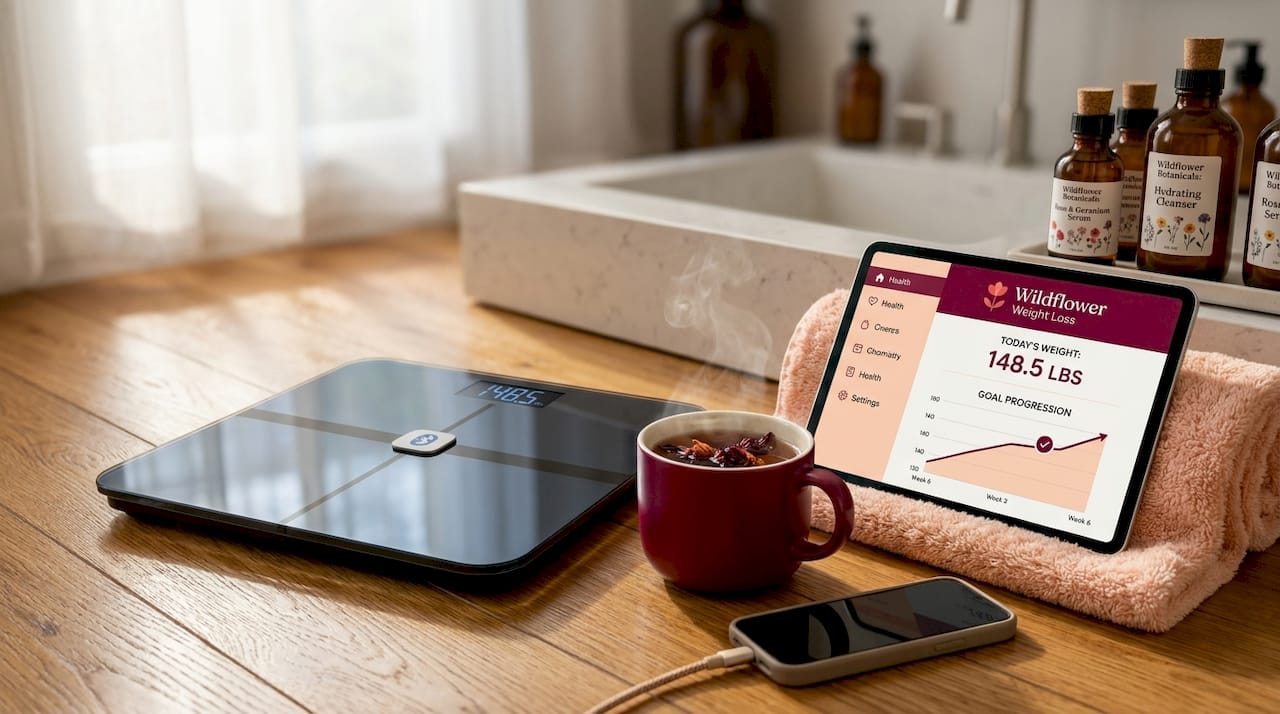
Virtual programs require a reliable internet connection, a smartphone or tablet, and ideally a Bluetooth-enabled scale for automatic weigh-ins. Most telehealth platforms work through a simple app or browser. You don’t need to be tech-savvy. You just need to show up consistently.
Item | Why it matters | Budget-friendly option |
Reliable WiFi | Video coaching calls | Mobile hotspot as backup |
Smart scale | Weekly weigh-ins | Basic digital scale works too |
Smartphone or tablet | Secure messaging, app access | Older models work fine |
Comfortable headphones | Live group coaching calls | Earbuds included with phone |
Journal or notes app | Habit and mood tracking | Free apps available |
Choosing the right provider and community
Not all virtual programs are built the same. Look for one that offers live coaching (not just pre-recorded videos), direct access to a licensed provider, and a genuine community of women who share your goals. Programs designed by women, for women understand the specific hormonal, emotional, and lifestyle factors at play. When you start your journey, choose a program that makes you feel seen and supported from day one.
Pro Tip: Before your first telehealth visit, write down your top three health goals, your biggest obstacles, and any medications or supplements you currently take. Having that list ready makes your intake call faster and much more productive.
Step-by-step virtual weight loss workflow for women
With the right tools and mindset, you’re ready to build your workflow. Here’s how to do it step by step.
Complete your intake assessment. Your first step is an honest, detailed health intake. This covers your weight history, current health conditions, menstrual or menopause status, and lifestyle habits. Be completely honest. The more your provider knows, the better your personalized plan will be.
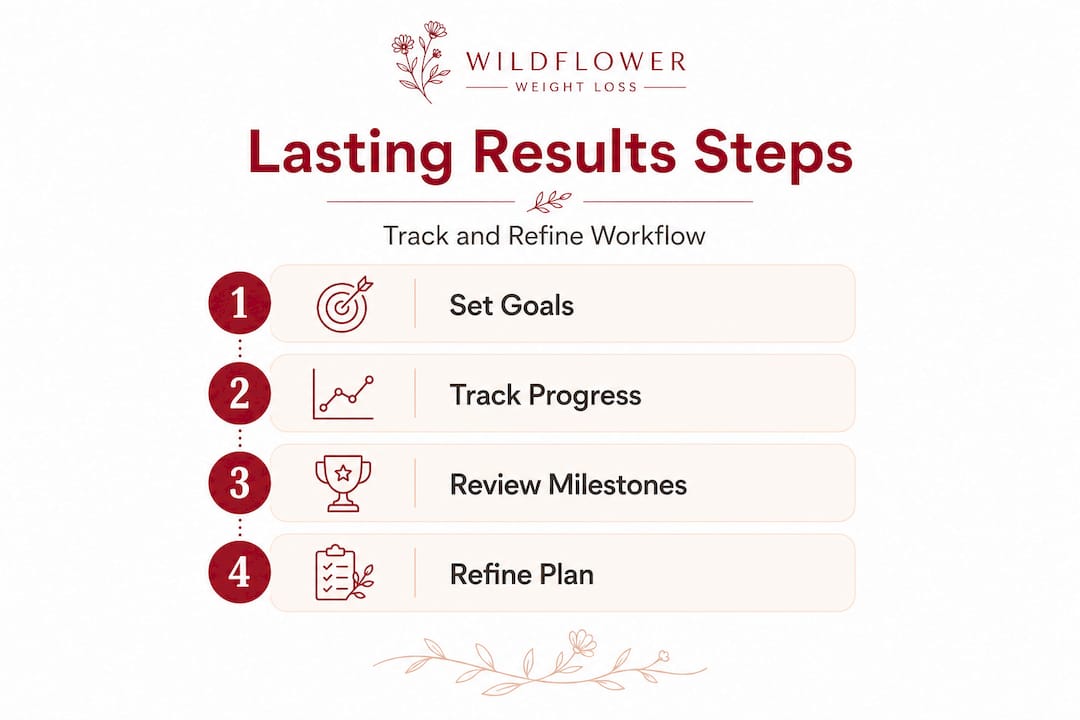
Set specific, measurable goals. Vague goals like “lose weight” rarely produce results. Work with your coach to set targets like “lose 10 pounds in 12 weeks” or “walk 30 minutes four times a week.” Goals tied to habits are easier to maintain than number-only goals.
Review medication options with your provider. This is where science really helps you. Medications like tirzepatide (Mounjaro, Zepbound) and semaglutide (Ozempic, Wegovy) have strong clinical backing. Clinical trial data shows 15 to 22% total body weight loss over 72 weeks, with women in menopause averaging 23% loss compared to 3% for placebo. Saxenda, Contrave, and other options are also available based on your unique needs.
Activate your customizable dietary system. A one-size-fits-all meal plan doesn’t work for Florida women juggling work, family, and social events. A customizable dietary system lets you build around foods you love, your schedule, and your health conditions.
Engage with AI-personalized training. Movement matters for muscle mass, metabolism, and mood. AI-driven training adjusts your exercise plan based on your progress, preferences, and any physical limitations. It meets you where you are and grows with you.
Join weekly live group coaching calls. This is where the community magic happens. Live coaching with real women facing similar challenges keeps you accountable and energized. Show up, ask questions, and celebrate wins together.
Use secure texting between appointments. Florida telehealth regulations allow you to communicate directly with your provider between visits. If you have side effects, questions, or a rough week, you don’t have to wait for your next appointment.
Attend monthly community events. Monthly Girl’s Nights and virtual social events keep the experience enjoyable. Weight loss shouldn’t feel like punishment. Celebrating progress with other women is part of what makes the journey sustainable.
Medication | Type | Average weight loss | Best for |
Tirzepatide (Mounjaro/Zepbound) | GIP/GLP-1 dual agonist | 15 to 22% body weight | Women in menopause, high BMI |
Semaglutide (Ozempic/Wegovy) | GLP-1 agonist | 12 to 15% body weight | Broad use, diabetes history |
Saxenda (liraglutide) | GLP-1 agonist | 5 to 8% body weight | Gradual, sensitive patients |
Contrave | Naltrexone/bupropion | 5 to 9% body weight | Cravings, emotional eating |
How to troubleshoot common setbacks and sustain progress virtually
Even with a solid plan, every journey faces hurdles. Here’s how to keep moving forward and what to do when you hit a rough patch.
When the scale stops moving
Weight plateaus are frustrating but completely normal. Your body adapts to new habits, and progress often shifts from the scale to body composition, energy, and mood. Before you change everything, give a plateau at least three to four weeks. Then review your food tracking honestly, check your activity levels, and talk to your coach.
Research confirms that telephone coaching can reverse short-term regain, though effects can fade if ongoing support isn’t maintained. This is exactly why weekly weigh-ins and consistent coaching check-ins are so valuable in a virtual program. You’re never dealing with a setback alone.
“The most important thing isn’t how fast you’re losing. It’s whether you’re building habits that you can keep for the rest of your life.”
Technology trouble
App crashes, video call glitches, and forgotten passwords happen. Don’t let a tech problem derail your whole week. Keep a backup plan: know your provider’s direct phone number, save your login credentials somewhere safe, and have your doctor’s telehealth portal bookmarked on two devices.
Motivation dips
Motivation naturally rises and falls. The key is building routines that don’t depend on feeling motivated. Schedule your coaching calls like doctor appointments. Set a recurring reminder for your weekly weigh-in. Put your workout clothes out the night before. These small systems carry you through the days when willpower runs low.
Reconnect with your “why” by journaling for five minutes about your goals.
Text your provider or community group when you’re struggling.
Celebrate non-scale victories: better sleep, more energy, clothes fitting differently.
Review your progress photos from week one versus now.
Attend the next live coaching call even if you haven’t had a perfect week.
Adjust your goal if it no longer feels realistic or motivating.
Explore the online support resources available to keep momentum strong.
Pro Tip: When you feel like quitting, attend the next group call before making any decisions. Hearing other women’s stories often reignites your own drive more than any solo strategy.
How to measure results and refine your workflow for lasting change
Tracking your successes and your struggles makes all the difference. Here’s how to ensure you’re building on your progress sustainably.
Go beyond the scale
Weight is just one data point. Women often notice changes in body composition, energy, sleep quality, and clothing fit long before the scale reflects significant change. Combining multiple tracking methods gives you a fuller, more encouraging picture of your progress.
Weekly weigh-ins: Consistent timing matters. Weigh yourself the same day, same time, and same conditions every week.
Monthly progress photos: Take front, side, and back photos in the same outfit each month. Visual changes are powerful and motivating.
Mood and energy diary: Note how you feel each day. This helps you connect habits, food choices, and sleep to your overall wellbeing.
Body measurements: Measure your waist, hips, and thighs monthly. These numbers often drop even when weight stalls.
Habit tracking: Did you hit your movement goals? Stick to your meal plan? Get enough sleep? Tracking habits tells you why your results are moving or stalling.
Clinical milestones to watch for
Clinical programs define meaningful progress as losing 5 to 10% of your total body weight. Even a 5% loss significantly reduces the risk of type 2 diabetes, high blood pressure, and joint pain. Women using tirzepatide in trials achieved up to 23% weight loss over 72 weeks, showing that with the right medication and support, truly meaningful results are possible.
Tracking tool | Frequency | What it tells you |
Smart scale weigh-in | Weekly | Overall weight trend |
Body measurements | Monthly | Fat loss and body composition |
Progress photos | Monthly | Visual changes and motivation |
Mood and energy journal | Daily or weekly | Lifestyle patterns and wellbeing |
Habit tracker | Daily | Consistency and behavior data |
Provider check-in | Monthly or as needed | Medical safety and medication review |
When to revise your workflow
If you’ve been consistent for six weeks and see no measurable change, it’s time to revisit your plan with your provider. Adjusting medication dosage, updating your meal plan, or adding a new movement type can break through a long plateau. Your workflow isn’t set in stone. It’s a living plan, and the weight loss tracker guides on our blog can help you interpret your data clearly.
What most virtual weight loss programs overlook—and what actually works
Let’s step back for a moment and talk honestly about what truly makes a virtual weight loss workflow sustainable.
Most programs focus almost entirely on the medication or the meal plan. And yes, those things matter. But the real secret is something far simpler and far more powerful: finding your people. Women who feel genuinely connected to a community are dramatically more likely to maintain their results than those going it alone with a pill and a diet sheet.
We’ve seen this over and over again. A woman starts strong, hits a tough week at work, misses a few check-ins, and quietly fades away. What brings her back? Almost always, it’s a message from another woman in the group asking where she’s been. That one moment of real human connection does more than any calorie tracker.
Here’s our honest take on medications too. They are genuinely powerful tools. The science behind GLP-1 and tirzepatide is remarkable.
Self-compassion is another piece that’s almost never talked about in clinical settings. Perfection is not the goal. Progress is the goal. The women who succeed long-term are not the ones who never slip up. They’re the ones who slip up and get back on track without weeks of guilt. That mindset shift is available to every woman reading real stories from women who have walked this path before you.
Accountability is real, but it’s not about an app tracking your steps. It’s about knowing that someone is genuinely rooting for you. That’s what a well-designed virtual program, built by women for women, delivers.
Ready to start your virtual wellness transformation?
If you’re ready to put your workflow into action, we’d love to have you join us. At Wildflower Women’s Weight Loss, we’ve built a program around everything that actually works for women in Florida: science-backed medications, personalized nutrition, AI training, and a warm, encouraging community that meets you where you are.
You can explore our virtual program challenges to find the right starting point, or jump right in and get started with Wildflower today. We host weekly live coaching calls, open office hours, monthly Girl’s Nights, and so much more. This is a program designed by women, for women, and we can’t wait to cheer you on every step of the way.
Frequently asked questions
Do virtual weight loss programs work better for women than men?
Trial data shows women lose a higher percentage of body weight than men in medical weight loss programs using GLP-1 and tirzepatide medications, making these programs especially promising for women.
How long should I stay on weight loss medication as part of a virtual program?
Most experts recommend 6 to 12 months of medication use, which is enough time to build lasting habits while using the medication as a powerful tool rather than a permanent solution.
What happens if I regain weight during a virtual program?
Brief tele-coaching can help reverse short-term regain, but sustained success depends on consistent community support, regular check-ins, and adapting your approach as your life changes.
What’s the best way to stay motivated in a virtual weight loss workflow?
Scheduled live group coaching calls and a connected community of women with similar goals are among the most effective long-term motivation strategies, far more than tracking alone.
Are there special considerations for women in perimenopause or menopause?
Yes! Women in perimenopause or menopause may see greater benefits from tirzepatide, especially when combined with hormone replacement therapy, based on observational data from clinical settings.
Recommended