Role of exercise in weight loss: The Florida woman's guide
- Anne Marie Noe

- Jun 15
- 9 min read
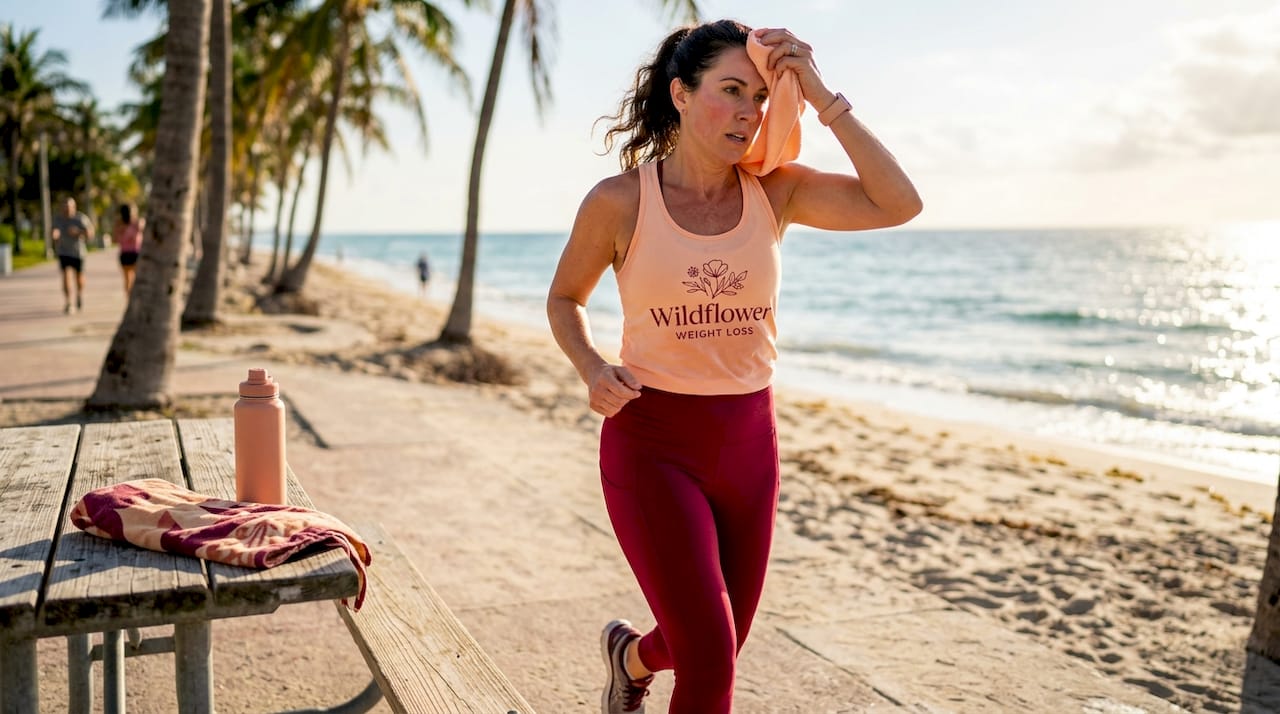
Exercise is often sold as the golden ticket to weight loss, but the real role of exercise in weight loss is more nuanced than “burn more, weigh less.” If you’ve been logging miles on the trail or sweating through classes and wondering why the scale barely moves, you’re not doing anything wrong. You’re just missing the full picture. Exercise does something even more valuable than creating a calorie deficit. It preserves your muscle, improves your body composition, and protects the weight loss you’ve worked so hard to achieve. Here’s how it all works, and how to make it work for you.
Table of Contents
Understanding weight loss: calorie balance and physical activity
Different exercise types and their impact on fat loss and muscle preservation
Why combining diet and exercise is essential for lasting weight loss
Practical exercise strategies for women 30-50 using virtual weight loss programs
Rethinking exercise’s role: why quality and preservation matter beyond the scale
Join a virtual weight loss program tailored for Florida women 30-50
Key Takeaways
Point | Details |
Exercise supports weight loss maintenance | Most initial weight loss comes from diet, but ongoing physical activity is vital to keep weight off long-term. |
Resistance training preserves muscle | Building or maintaining fat-free mass during weight loss leads to higher quality fat reduction and better health. |
Diet and exercise combined are best | Improving both your eating habits and physical activity delivers the greatest reductions in harmful fat, especially belly fat. |
Expect progress beyond the scale | Measure your waist, body composition, and strength to capture improvements that the scale alone might miss. |
Virtual programs offer personalized support | Customized exercise and medical options delivered remotely help women balance effective weight loss with busy lifestyles. |
Understanding weight loss: calorie balance and physical activity
Every sustainable weight loss plan starts with one principle: you need to use more calories than you consume. This is called a calorie deficit, and it’s the foundation of all weight loss. Most weight loss comes from reducing calories through your diet, not from burning them off at the gym.
That might feel counterintuitive, especially with all the emphasis on “working out” in popular fitness culture. But the math is simply in favor of diet. A 45-minute walk burns roughly 200 calories. A single high-calorie meal can add 800 or more. You can’t out-exercise a poor diet, and most women spend more energy trying to do exactly that.
What exercise does brilliantly is help maintain weight loss after you’ve lost it. Regular physical activity increases the number of calories your body uses daily, and it signals your body to hold onto muscle tissue while shedding fat. That’s a big deal. Without exercise, a good chunk of what you lose on the scale can actually be muscle, not fat.
Here’s what to understand about weight loss tips for women and calorie balance:
Diet controls the primary calorie deficit needed for weight loss
Exercise adds to your daily calorie usage and helps maintain that deficit over time
Physical activity is the strongest predictor of keeping weight off long-term
Combining a sustainable eating plan with regular movement gives you both the loss and the staying power
Realistic expectations about exercise’s role reduce frustration and keep you consistent
Different exercise types and their impact on fat loss and muscle preservation
Not all exercise does the same job. The two main types you’ll encounter are aerobic exercise (cardio like walking, swimming, or cycling) and resistance training (strength work using weights, bands, or bodyweight). Both contribute to weight loss, but they work very differently inside your body.
Aerobic exercise is excellent for burning calories during a session. It supports heart health, improves mood, and absolutely has a place in your routine. But here’s where it gets interesting: when you combine aerobic training with calorie restriction and nothing else, your body can actually lose fat-free mass (that’s your muscle) along with the fat. That’s the part of the equation most women over 30 miss entirely.
Resistance training produced the best weight loss profile in controlled research, with the greatest fat-mass reduction and increased fat-free mass. Aerobic training groups, by contrast, lost fat-free mass. That difference matters enormously, especially after 35 when muscle loss naturally accelerates.
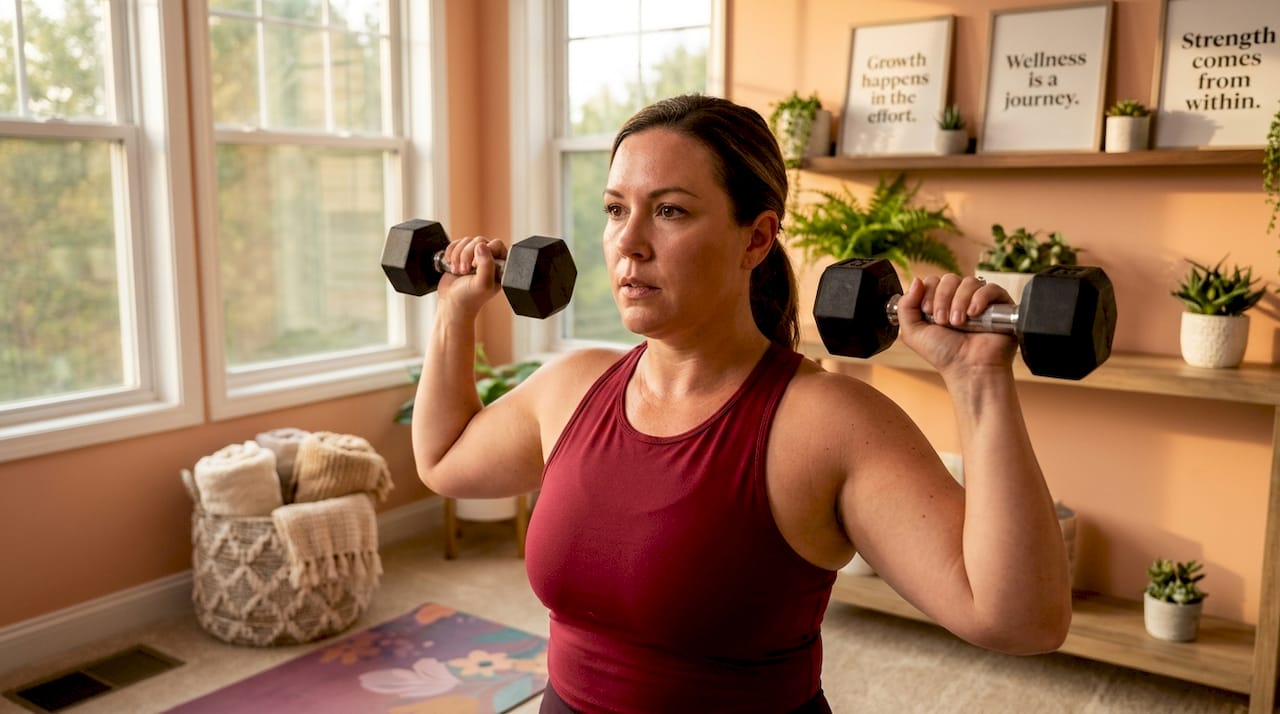
Frequency also matters. Exercising three to six times per week reduced fat-mass percentage significantly more than calorie restriction alone, with more sessions producing greater results. More movement, better body composition. It’s that clear.
Pro Tip: If your schedule only allows two to three resistance sessions per week, that is still enough to preserve muscle and improve fat loss quality. Consistency over perfection is your best strategy.
Comparison of aerobic and resistance training for weight loss outcomes
Feature | Aerobic training | Resistance training |
Calories burned per session | Higher | Moderate |
Fat mass reduction | Yes | Yes, greater reduction |
Fat-free mass (muscle) change | Often decreases | Increases or maintained |
Waist and abdominal fat | Moderate reduction | Strong reduction |
Metabolic rate impact | Minimal long-term | Positive, preserves resting metabolism |
Best use in weight loss | Calorie burn and cardio health | Body composition and muscle preservation |
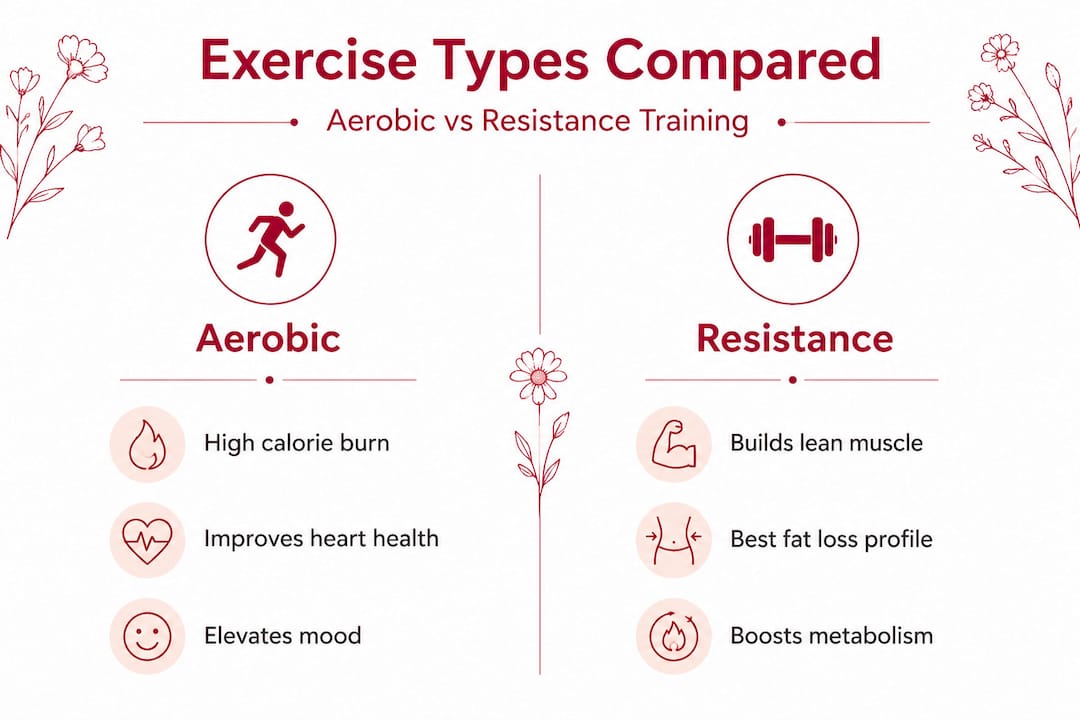
Resistance training consistently showed a higher ratio of fat mass loss to total weight loss compared to aerobic training. In plain terms: you lose more of the right stuff when you lift. Aerobic training is still worth doing, but leading with resistance work, especially for women in their 30s and 40s, is a smart approach to exercise for fat loss that most programs still underemphasize.
Key benefits resistance training adds beyond the scale:
Improves insulin sensitivity, which helps manage blood sugar and reduce belly fat
Increases resting metabolic rate so you burn more calories even at rest
Reduces waist circumference and visceral (deep belly) fat more effectively
Builds functional strength that supports daily life and injury prevention
Protects bone density, which becomes especially important for women after 40
Why combining diet and exercise is essential for lasting weight loss
Here is the truth most fitness content glosses over: your body is smarter than any workout plan. When you exercise more, your body often compensates by reducing energy elsewhere, such as through less fidgeting, lower spontaneous movement, or even slight hormonal shifts. Exercise alone does not create the large calorie-burning effect most people expect, because the body quietly adjusts its energy output elsewhere.
This is why diet drives the deficit and exercise supports everything else. The good news is that “everything else” is significant. Exercise improves insulin sensitivity, supports fat oxidation (your body’s ability to burn fat as fuel), prevents the metabolic slowdown that comes with calorie restriction, and directly improves your mood and energy.
When you improve both your diet quality and your physical activity consistently over time, the results are powerful. Improvements in both diet and activity reduce total fat, waist circumference, and visceral fat more than either change alone. Visceral fat is the fat stored deep in your abdomen around your organs, and it’s the type most closely linked to heart disease, diabetes, and inflammation.
“The women who see lasting results are not the ones who exercise the hardest. They’re the ones who pair consistent movement with a sustainable eating plan and give their body time to respond.”
The Florida lifestyle actually gives you a genuine advantage here. Year-round warmth means more opportunities for outdoor walks, water activities, bike rides, and movement that doesn’t feel like a chore. Leaning into that environment, rather than relying solely on gym time, can make the diet and exercise synergy feel natural and even enjoyable.
Key ways exercise and diet work together:
Diet creates the calorie deficit; exercise prevents muscle loss during that deficit
Exercise improves the hormonal environment that makes fat loss easier
Combined approach reduces dangerous visceral fat more than either strategy alone
Sustainable dietary habits keep energy high enough to support regular training
Together, they reinforce motivation by producing visible changes in how you feel and look
Practical exercise strategies for women 30-50 using virtual weight loss programs
Knowing the science is one thing. Putting it into a real schedule is another. Here’s a practical framework that works well for women in Florida aged 30 to 50, especially within a virtual program format where flexibility and accountability are built in.
Aim for at least 150 to 300 minutes of moderate-intensity aerobic activity per week. To prevent weight regain after you’ve lost it, 300 minutes per week is the target, along with muscle-strengthening work on two or more days.
Here is a realistic weekly framework to get you started:
Monday: 30-minute resistance training session focusing on lower body (squats, lunges, hip thrusts)
Tuesday: 30 to 45-minute moderate walk, bike ride, or swim outdoors
Wednesday: 30-minute resistance training focusing on upper body and core
Thursday: 30 to 45-minute aerobic session (a Florida beach walk counts beautifully here)
Friday: Full body resistance circuit or a yoga-strength hybrid session
Saturday: Longer, enjoyable outdoor movement, a hike, paddleboard session, or group fitness class
Sunday: Active rest, a gentle walk or stretching to support recovery
Measure progress by tracking waist circumference, how your clothes fit, and how much weight you can lift, not just the number on the scale. Your body composition can improve dramatically even when the scale barely shifts.
Medical weight loss therapies like GLP-1 receptor agonists (medications like Ozempic, Wegovy, or Tirzepatide) reduce appetite and support weight loss effectively, but they work best alongside exercise. Exercise preserves the muscle mass these medications do not target and improves insulin sensitivity in ways medication alone cannot replicate.
Pro Tip: Use your virtual program’s AI-personalized training to adjust your resistance workouts as you grow stronger. Progressive overload (gradually increasing weight or reps) is what keeps your body adapting and your fat loss moving forward.
Rethinking exercise’s role: why quality and preservation matter beyond the scale
Here is a perspective we share with every woman who joins us: the scale is the worst possible tool for measuring exercise success. We know that feels frustrating to hear when you’re working hard and hoping to see a number drop. But hear us out.
Your body compensates for extra energy output in ways that limit how much extra calorie burn shows up on a weekly weigh-in. What exercise does create, visibly and measurably, is better muscle-to-fat ratio, smaller waist measurements, stronger lifts, and a body that holds weight off more effectively over time.
We’ve seen women add resistance training to their program, barely move on the scale for two weeks, and then drop two dress sizes over the following month. That’s fat-free mass preservation at work. When you protect your muscle during a calorie deficit, you protect your metabolism. A faster metabolism means your body burns more calories at rest, every single day, which compounds over months into real, lasting change.
The women who struggle most with long-term weight loss are often the ones who go hard on cardio, see the scale drop fast (mostly muscle and water), then plateau and regain. The women who succeed build a foundation of strength, eat in a moderate deficit, and track the metrics that actually reflect progress. That shift in perspective, from “how much did I lose this week” to “how much stronger and leaner am I becoming,” is genuinely life-changing. We see it every week through our weight loss quality insights.
Join a virtual weight loss program tailored for Florida women 30-50
You now have a clear picture of how exercise, diet, and smart strategy work together to create weight loss that lasts. What you deserve next is a program built around exactly these principles, designed by women, for women, and built for real Florida lives.
At Wildflower Weight Loss, we combine AI-personalized training plans (including progressive resistance and aerobic programs), access to medical weight loss support with options like Tirzepatide, Semaglutide, Ozempic, Wegovy, and more, and a warm community of women in the same season of life. We track body composition, not just scale weight. We show up with weekly group coaching calls, virtual weigh-ins, live open office hours, and monthly Girls’ Nights because we know accountability is everything. If you’re ready to explore virtual weight loss challenges or simply want to take the first step, come start your weight loss journey with women who genuinely get it. Your virtual weight loss program is waiting.
Frequently asked questions
Is exercise alone enough for effective weight loss?
Exercise alone generally does not create a large enough calorie deficit for significant weight loss. Diet controls the deficit while exercise supports health, body composition, and long-term maintenance.
How often should I exercise to maintain weight loss?
To prevent weight regain, aim for at least 300 minutes per week of moderate-intensity aerobic activity plus strength training on two or more days each week.
Why is resistance training important during weight loss?
Resistance training preserves and increases fat-free mass (muscle) during calorie restriction. Greatest fat-mass reduction and improved fat-free mass are both unique benefits of resistance training compared to aerobic exercise alone.
Can medical weight loss therapies replace exercise?
Medical therapies reduce appetite and support weight loss effectively, but exercise complements them by improving insulin sensitivity, preserving muscle, and enhancing body composition in ways medication cannot replicate.
How can I track progress beyond just the scale weight?
Track waist circumference, how your clothes fit, and strength progress in your workouts. Body composition measures and waist measurements better reflect your actual fat loss and muscle gains than scale weight alone.
Recommended