
Why lose weight before menopause: your guide to a healthy transition
- Anne Marie Noe

- Jun 17
- 10 min read

If you’ve noticed your jeans fitting differently even though your habits haven’t changed, you’re not imagining it. Understanding why lose weight before menopause matters is one of the most empowering things you can do in your 40s. Weight gain around menopause is common, but it is not inevitable, and it is not simply about willpower. Hormonal shifts, muscle loss, and fat redistribution are already happening years before your final period. The women who act early feel better, manage symptoms more easily, and protect their long-term health in ways that become much harder to achieve once menopause is in full swing.
Table of Contents
Key Takeaways
Point | Details |
Early weight loss benefits | Losing 5-10% of your body weight before menopause improves metabolism and reduces symptoms. |
Muscle preservation is vital | Resistance training and adequate protein intake protect muscle mass and resting metabolic rate. |
Fat redistribution risks | Menopause shifts fat to your abdomen increasing health risks, so waist circumference monitoring matters. |
Holistic lifestyle approach | Balancing nutrition, physical activity, sleep, and stress management prevents unwanted weight gain. |
Personalized support helps | Tailored programs with coaching improve motivation, accountability, and long-term success. |
Understanding menopause and weight gain
Before we get into the benefits of losing weight before menopause, it helps to understand what is actually happening inside your body. Many women are surprised to learn that the changes begin years earlier than expected, during the phase called perimenopause.
Women gain an average of 1.5 pounds per year during midlife because of decreasing estrogen, muscle loss (sarcopenia), insulin resistance, and an increase in central fat. These are biological forces, not personal failures. Knowing that makes a real difference in how you approach your health.
Here is what is driving the change:
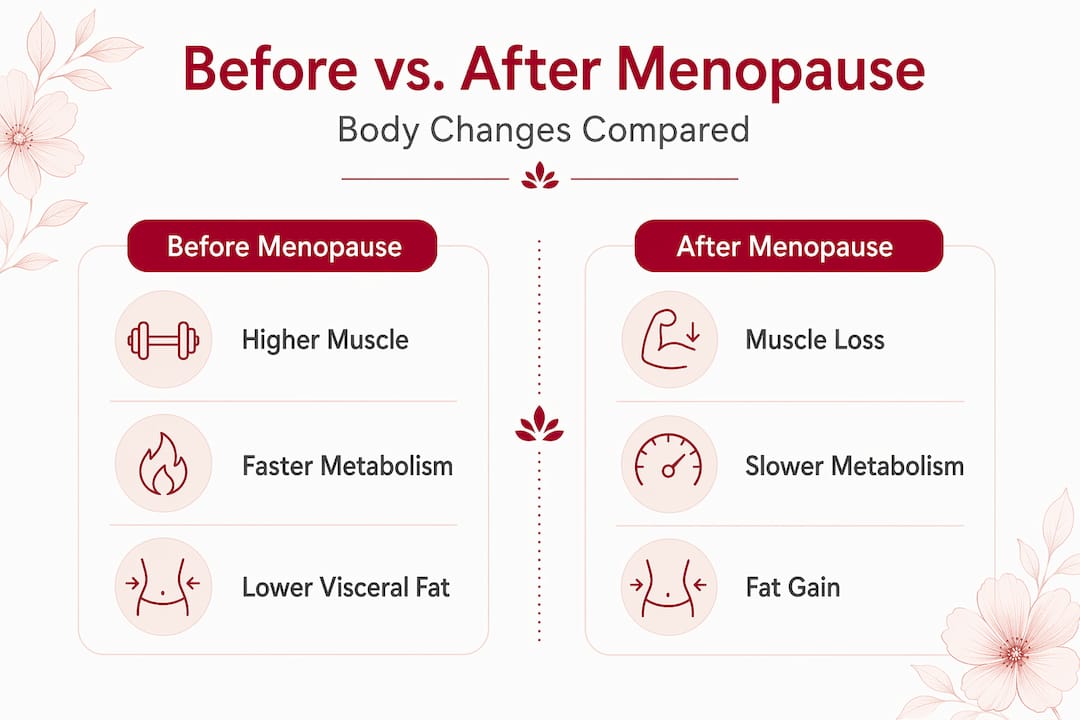
Estrogen decline causes fat to shift away from your hips and thighs toward your abdomen. Visceral fat increases with this redistribution, raising your risk of metabolic syndrome and cardiovascular disease.
Muscle mass declines 3-8% per decade after age 30 and accelerates during perimenopause. Less muscle means a slower resting metabolism, so your body burns fewer calories even at rest.
Insulin resistance rises as estrogen drops, making it easier to store fat and harder to use carbohydrates efficiently.
Sleep disruption and cortisol spikes during perimenopause increase appetite and cravings, especially for high-calorie comfort foods.
These are hormonal and metabolic shifts, not lifestyle choices. The good news is that understanding them gives you a real edge. With the right approach, you can work with your biology instead of against it. Head over to our menopause weight gain blog for more on what perimenopause looks and feels like in your 40s.
With this understanding of the biological changes, let’s explore how weight loss before menopause can counteract these effects and improve your health.
Health benefits of losing weight before menopause
You do not need to lose 50 pounds to feel a meaningful difference. Losing just 5-10% of your body weight before menopause can improve insulin sensitivity, relieve hot flashes, enhance sleep quality, and cut cardiovascular risk. For a 180-pound woman, that is 9 to 18 pounds. Very achievable.
The benefits of losing weight before menopause include:
Fewer and less severe hot flashes. Excess body fat acts like an insulating layer, and it also affects how your brain regulates body temperature. Women with a healthy weight consistently report milder vasomotor symptoms (hot flashes and night sweats).
Better sleep. Weight loss reduces sleep apnea risk, lowers nighttime cortisol, and makes it easier for your body to regulate temperature, all of which add up to deeper, more restorative sleep.
Improved joint health and mobility. Every pound of excess weight adds roughly four pounds of pressure on your knees. Losing weight before menopause protects your joints before the natural cartilage changes of midlife accelerate.
Reduced risk of type 2 diabetes and heart disease. Modest 5-10% weight loss produces measurable improvements in insulin sensitivity and cardiovascular markers in perimenopausal women.
Better mood and mental clarity. Weight loss, regular movement, and stable blood sugar all support brain chemistry. Many women report feeling noticeably sharper and more emotionally steady.
Stat to know: A 5-10% reduction in body weight is enough to produce clinically meaningful improvements in metabolic health for perimenopausal women. You do not need to reach a “perfect” weight to feel better.
The importance of weight loss prior to menopause is not about aesthetics. It is about building a body that carries you through this transition with strength and resilience. Explore our tailored weight loss programs built specifically for women at this stage.
Understanding the health benefits makes it clear why protecting muscle and managing fat before menopause matters for lasting wellness.

Counteracting muscle loss and metabolism slowdown
Here is something most women do not hear until it is too late: lean muscle loss accelerates about two years before your final period, and this is the primary driver of metabolic slowdown. It is not your thyroid. It is not stress alone. It is the quiet, invisible loss of calorie-burning muscle tissue.
Muscle is metabolically expensive. It burns calories around the clock just to maintain itself. When you lose it, your resting metabolic rate drops and the same food intake that once kept you stable now causes weight gain.
How to fight back:
Resistance train 2-3 times per week. Compound movements like squats, deadlifts, rows, and presses are non-negotiable. They recruit the most muscle and stimulate the most growth.
Distribute protein across all three meals. Eating 25-30 grams of high-quality protein per meal activates muscle protein synthesis more effectively than loading most of your protein into one meal.
Avoid drastic calorie restriction. Eating too little speeds up muscle loss, which is the opposite of what you want. You need enough fuel to train, recover, and hold onto your lean tissue.
Walk daily. Even 20-30 minutes of walking supports insulin sensitivity and helps regulate appetite without stressing your joints or your recovery.
Pro Tip: If you are new to lifting, start with two full-body sessions per week using bodyweight or light dumbbells. Consistency over four to six weeks matters far more than intensity. You can always add load once the habit is solid.
Protecting your muscle preservation tips and finding the right resistance training plans for your fitness level makes all the difference at this stage.
Now that we know how to preserve metabolism, let’s look at effective lifestyle changes to prevent fat gain and metabolic syndrome.
Practical strategies to manage weight before menopause
Managing weight during menopause takes a specific game plan. Generic diet advice designed for 25-year-olds does not account for the hormonal and metabolic reality of a woman in her mid-40s. Here is what actually works.
1. Build meals around protein and fiber first. Aim for 25-30 grams of protein and at least 5 grams of fiber per meal. Both slow digestion, stabilize blood sugar, and reduce the cortisol-driven cravings that hit in the evening.
2. Control calories without obsessing over them. Individualized calorie control paired with increased fiber and moderate activity reduces body weight and waist circumference in perimenopausal women. Most active women in this range do well between 1600 and 2200 calories per day.
3. Move your body in ways you enjoy. In Florida, you have year-round access to walking trails, pools, beaches, and parks. Use them. Moderate-intensity movement five days per week has a profound effect on insulin sensitivity and fat metabolism.
4. Prioritize sleep like it is a training session. Getting 7-9 hours of sleep per night lowers cortisol, controls hunger hormones, and improves the results of every other healthy habit you practice. Poor sleep is one of the biggest hidden drivers of midlife weight gain.
5. Measure your waist, not just your weight. The scale does not tell the full story. Track your waist circumference monthly and aim to keep it under 35 inches. This is the most practical way to monitor visceral fat at home.
Pro Tip: Living in Florida means heat is a real barrier to outdoor exercise. Try scheduling your walks or outdoor workouts before 9 a.m. or after 6 p.m. to stay consistent through summer without overheating.
Here is a simple reference for the strategies above:
Strategy | Target | Why it matters |
Protein per meal | 25-30 grams | Supports muscle and reduces cravings |
Daily fiber intake | 25-35 grams | Stabilizes blood sugar, supports gut health |
Resistance training | 2-3 times/week | Preserves muscle and metabolic rate |
Daily movement | 30+ minutes | Improves insulin sensitivity |
Sleep per night | 7-9 hours | Reduces cortisol and hunger hormones |
Waist circumference | Under 35 inches | Tracks visceral fat risk |
Daily calorie range | 1600-2200 calories | Supports energy without muscle loss |
Find weight loss lifestyle tips and explore comprehensive weight programs designed around these exact strategies.
With effective strategies in place, let’s reflect on the deeper truth about menopause weight management many women miss.
The invisible remodeling: why timing and muscle quality matter
Your scale might not move, but your body composition can be shifting significantly. This is what researchers call the “invisible remodeling” of menopause, and it is why two women can weigh exactly the same but have very different levels of health and functional strength.
Fat gain accelerates at roughly 1.7% per year and lean mass declines at 0.2% per year during the menopausal transition, raising risk of sarcopenic obesity (the combination of muscle loss and fat gain). The scale may stay the same while your health is quietly deteriorating.
“Estrogen plays a critical role in muscle repair. When it drops, mitochondrial function in muscle is compromised, fat accumulates within muscle fibers (myosteatosis), and metabolic dysfunction follows.”
Here is how the picture compares between early action and delayed action:
Factor | Acting before menopause | Waiting until after menopause |
Muscle preservation | High with resistance training | Harder to rebuild from scratch |
Visceral fat risk | Manageable with lifestyle change | Requires more intensive intervention |
Metabolic rate | Maintained with muscle focus | Significantly reduced |
Hot flash severity | Reduced by healthy weight | Less responsive once established |
Bone density | Better supported | Decline more difficult to reverse |
BMI does not capture these changes. A normal BMI with high visceral fat and low muscle mass is more dangerous than it looks. That is why we encourage the women in our community to focus on sarcopenic obesity insights and body composition, not just the number on the scale.
Understanding this invisible process shapes how you approach your weight and muscle health before menopause.
Why now is the best time to take control: an informed perspective
We hear this a lot: “I’ll deal with it when menopause actually hits.” We understand the thinking, but we also know what the research shows, and the timing could not be more important.
Lean mass loss and visceral fat gain begin years before menopause, often quietly and without obvious symptoms. By the time most women realize something has shifted, the window for the easiest intervention has already started closing.
Here is the part that most popular advice misses entirely. Menopause weight gain is so often framed as a motivation problem or a discipline problem. It is neither. The physiology changes the rules of the game. Your body processes food differently. Your muscle responds differently to training. Your sleep, stress, and hunger hormones are operating under a new set of conditions.
Women who approach this transition expecting the old playbook to work often feel frustrated and defeated, not because they are doing anything wrong, but because they are using the wrong strategy. Healthy weight loss before menopause is not about eating less and moving more in a generic sense. It is about eating specifically, moving purposefully, and recovering intentionally.
The goal here is not to look the same as you did at 30. The goal is to feel strong, move freely, and protect your metabolic health for the decades ahead. Strength is the outcome that matters most. Not a number on a scale.
Women who build that strength before menopause hits enter the transition with far more resilience, physically and emotionally. We have seen it firsthand in our community. The women who show up consistently, even imperfectly, are the ones who feel genuinely good in their 50s and beyond.
Learn more about the menopause weight myths we see most often, and why letting go of them is the first real step forward.
How Wildflower Women supports weight loss before menopause
You now know why acting before menopause matters, and you have the strategies to start. But knowing what to do and doing it consistently are two different things. That is exactly where we come in.

At Wildflower Women, we built our virtual weight loss program specifically for women like you, because we are women like you. Our programs include weight loss medications like Mounjaro, Zepbound, Semaglutide, and more, paired with a customizable nutrition system and AI-personalized training. We hold weekly live group coaching calls, monthly Girl’s Nights, virtual weigh-ins, and open video office hours so you never feel alone in this process. Explore our tailored weight loss challenges or start your weight loss journey today. Florida women in their 40s and 50s deserve support that actually fits their life.
Frequently asked questions
Is it really possible to lose weight before menopause and keep it off?
Yes. Individualized weight management programs that include resistance training, balanced nutrition, and behavior support lead to sustainable weight loss during the menopausal transition. Consistency and the right strategy make a lasting difference.
How does muscle loss affect my metabolism during menopause?
Muscle burns more calories than fat at rest, so when lean muscle declines around menopause, your resting energy expenditure drops and weight management becomes noticeably harder without active strength maintenance.
What are the best exercises to do before menopause to prevent weight gain?
Resistance training 2-3 times per week using compound movements is the most effective approach. Resistance training is non-negotiable for preserving muscle and metabolism during perimenopause, paired with moderate daily aerobic activity for cardiovascular health.
Can diet alone prevent menopause weight gain?
Diet matters enormously, but combining calorie control, high fiber, adequate protein, and physical activity consistently outperforms diet alone. Sleep management and stress reduction are equally important pieces of the picture.
Why is waist circumference a better measure than weight during menopause?
Because fat shifts to the abdomen while muscle is lost, your scale weight can stay the same while your health risks increase. Visceral fat gain precedes scale changes, making waist measurement the more reliable indicator of metabolic risk during menopause.
Recommended